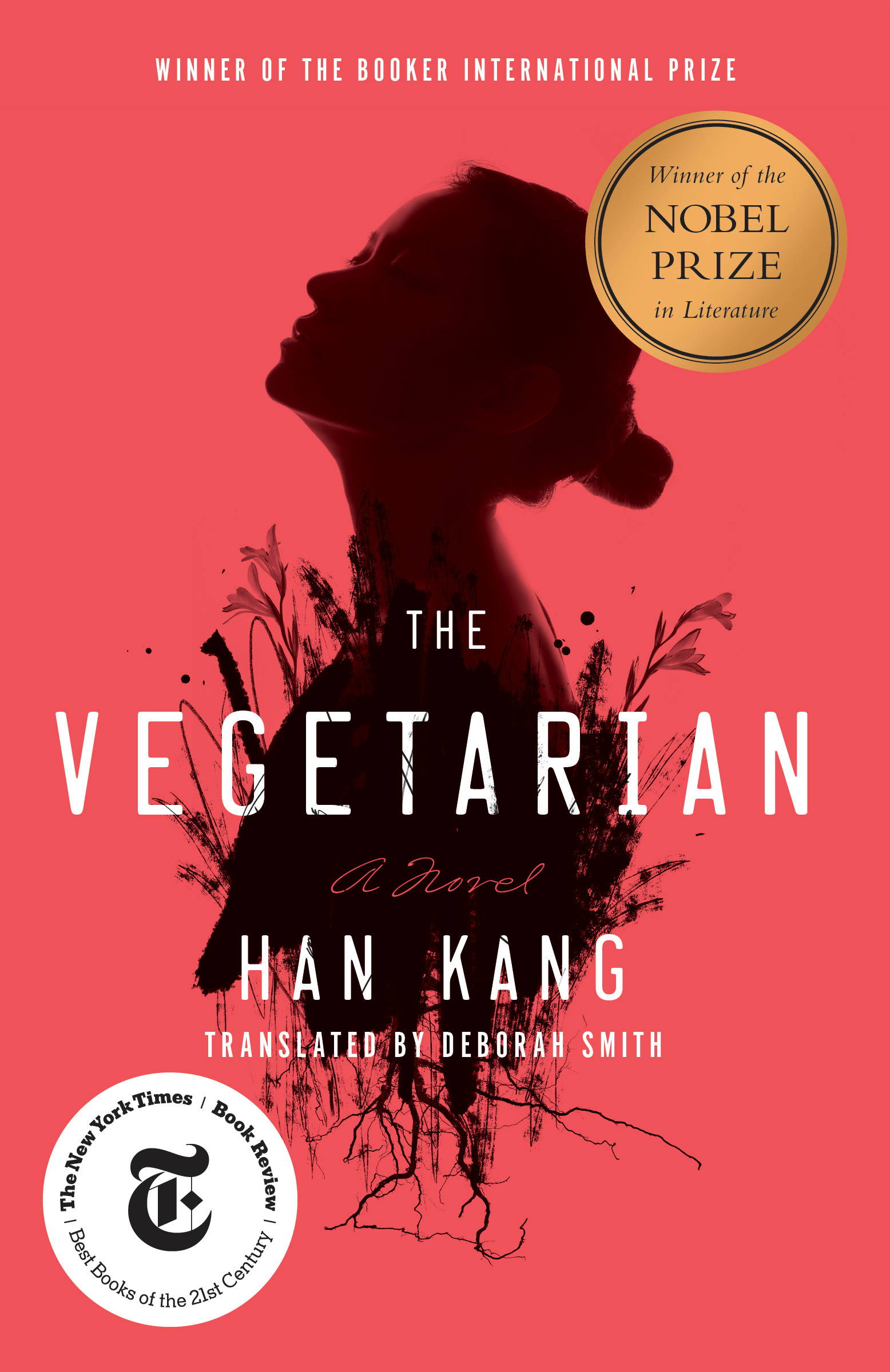
The Vegetarian
by Han Kang
Yeong-hye is a quiet, unremarkable wife in Seoul. Her husband chose her specifically for being unremarkable. One night she has a dream, graphic and violent and full of blood, and the next morning she throws out all the meat in the house. This sounds like a small thing. In the world this book lives in, it is not. Told in three parts from three different perspectives, none of them Yeong-hye’s own, the novel follows what happens when a woman decides her body is the only thing she has complete authority over, and the people around her refuse to accept that.
“Perhaps this is all a kind of dream. We have to wake up at some point, don’t we?”
What It Actually Felt Like
The thing about this book is that Yeong-hye barely speaks. We experience her almost entirely through what she means to the other people in her life, and those people are all, to varying degrees, trying to make her into something she can be used for. Her husband sees her as a domestic convenience that has malfunctioned. Her brother-in-law, a video artist, becomes obsessed with her body as canvas. Her sister In-hye is the most complicated of the three narrators, the one actually trying to reach her, and the one who understands the least about what Yeong-hye is doing.
What Yeong-hye is doing, I think, is refusing. Not a specific thing. Not her husband or her family or the violence she witnessed as a child. All of it. She’s trying to become something that can’t be consumed or damaged or obligated, and the form that takes is increasingly extreme, but the logic inside it is consistent. She wants to be a plant. She wants to photosynthesize. She wants to be so still and so passive that nothing can enter her anymore.
Han Kang won the Nobel Prize and this was the book that introduced most readers to her work, and you can feel why. The three-part structure is doing something deliberate with the way we understand the same person from the outside in, always at a remove, always partial. It’s a formally intelligent novel and the violence inside it, including a scene at a family dinner that is one of the most quietly devastating things I’ve read, is handled with complete precision.
The Honest Part
This is not a comfortable read and it is not supposed to be. The second section especially contains content around sexuality and bodily autonomy that some people will find very difficult. The book doesn’t ask you to enjoy any of it. It very clearly wants you to experience it.
Who This Is For
Readers who want their literary fiction to carry real weight. This is a book about what it costs a woman to say no to everything.
⭐⭐⭐⭐ Dark, surreal, important. Will read again.
Tags literary fiction, Korean literature, translated, bodily autonomy, mood: surreal and heavy